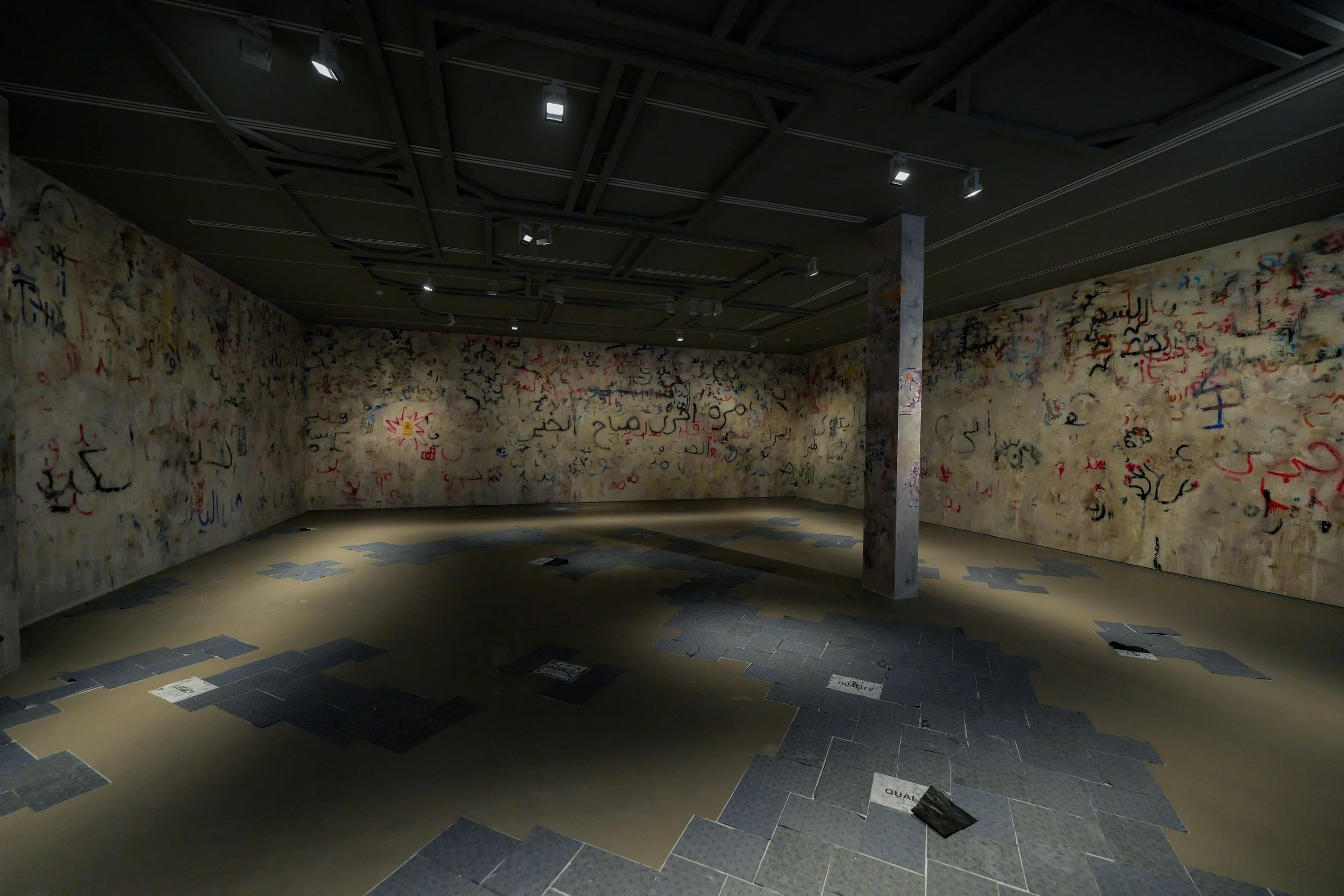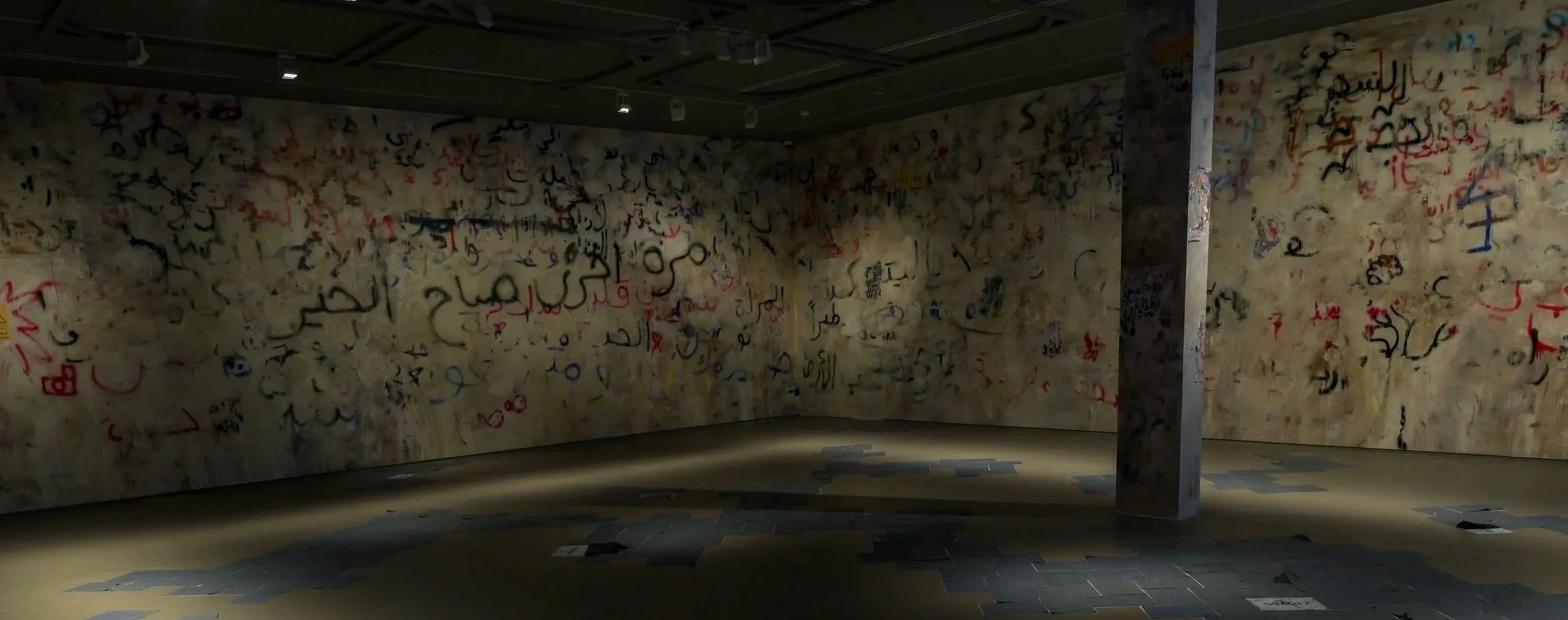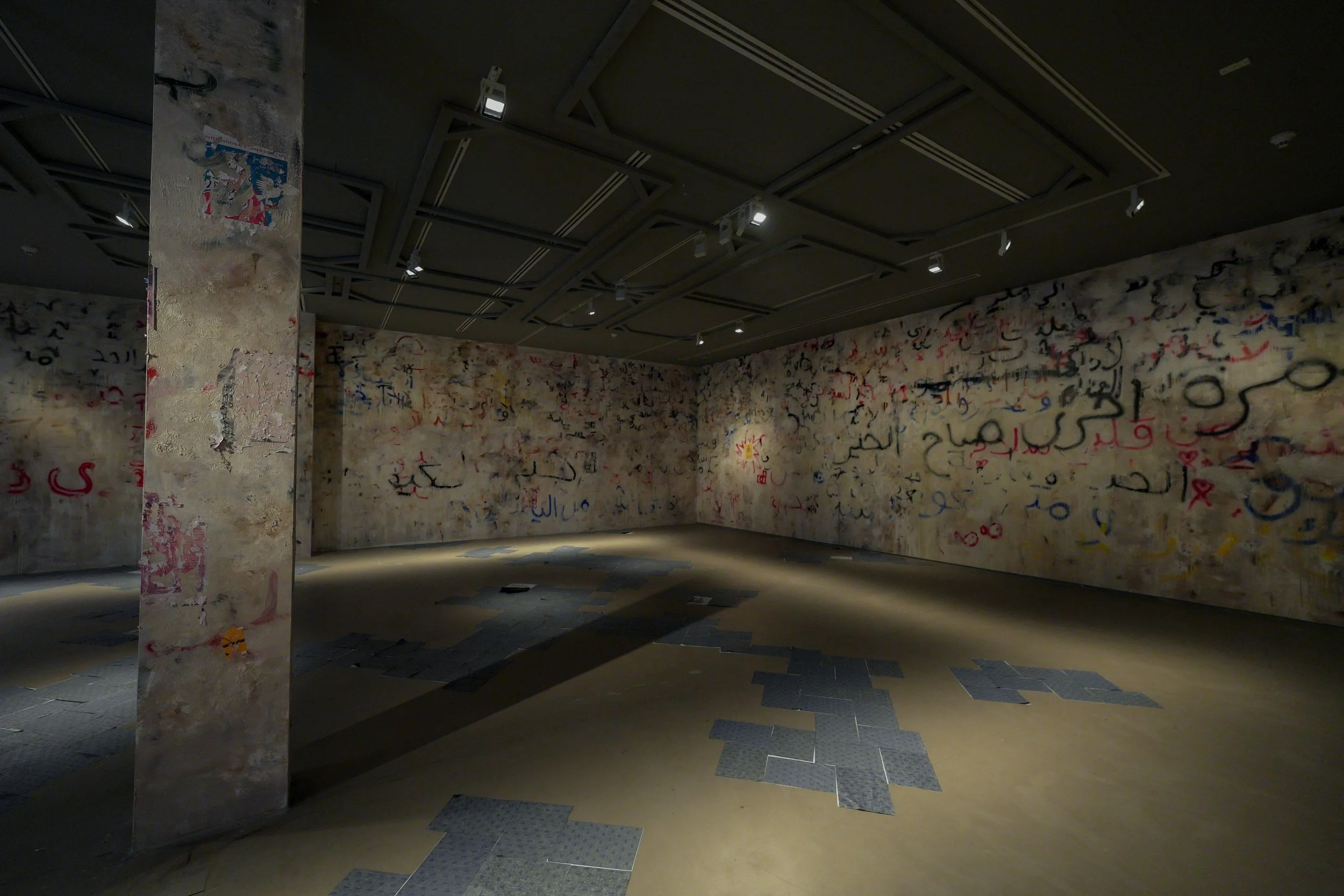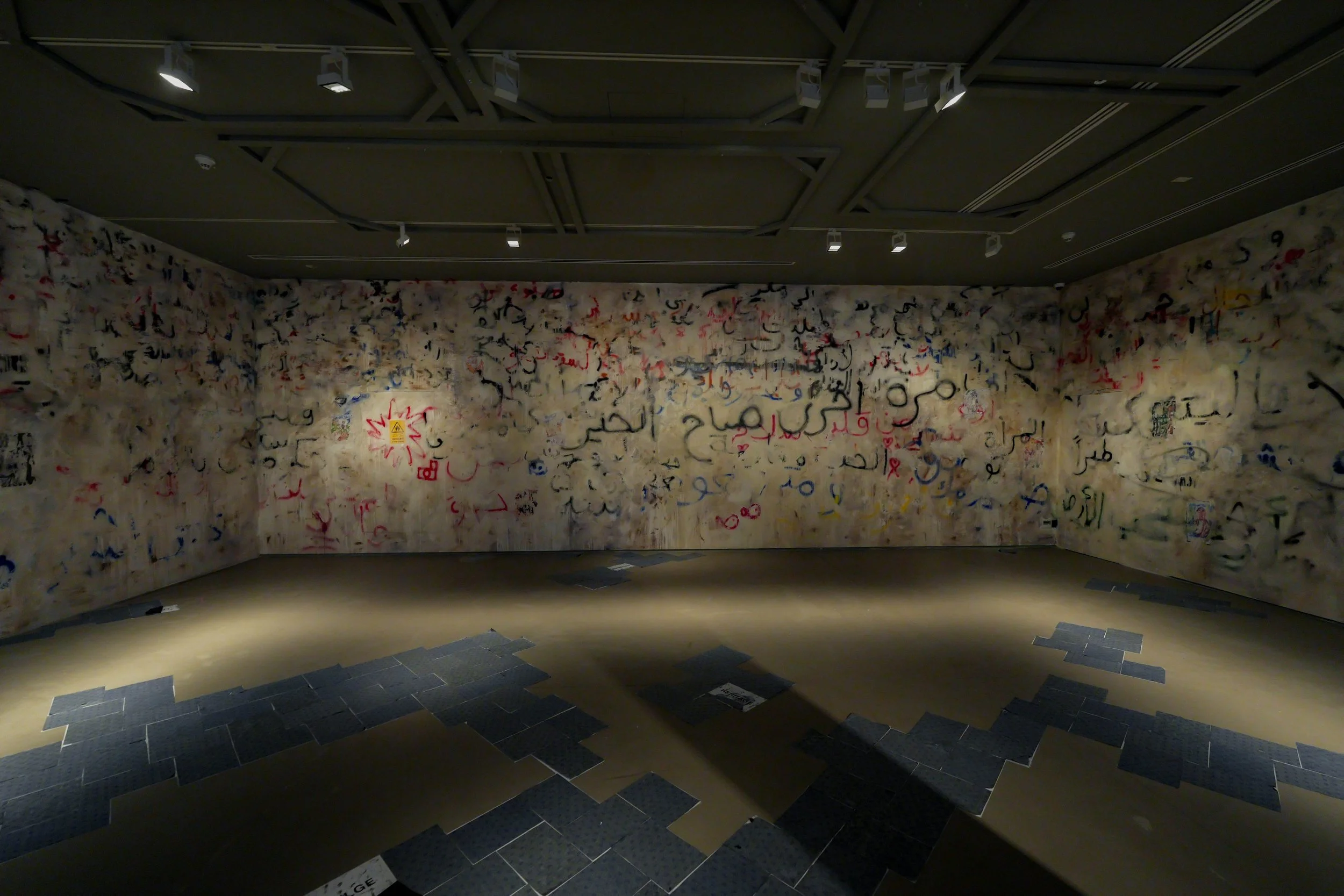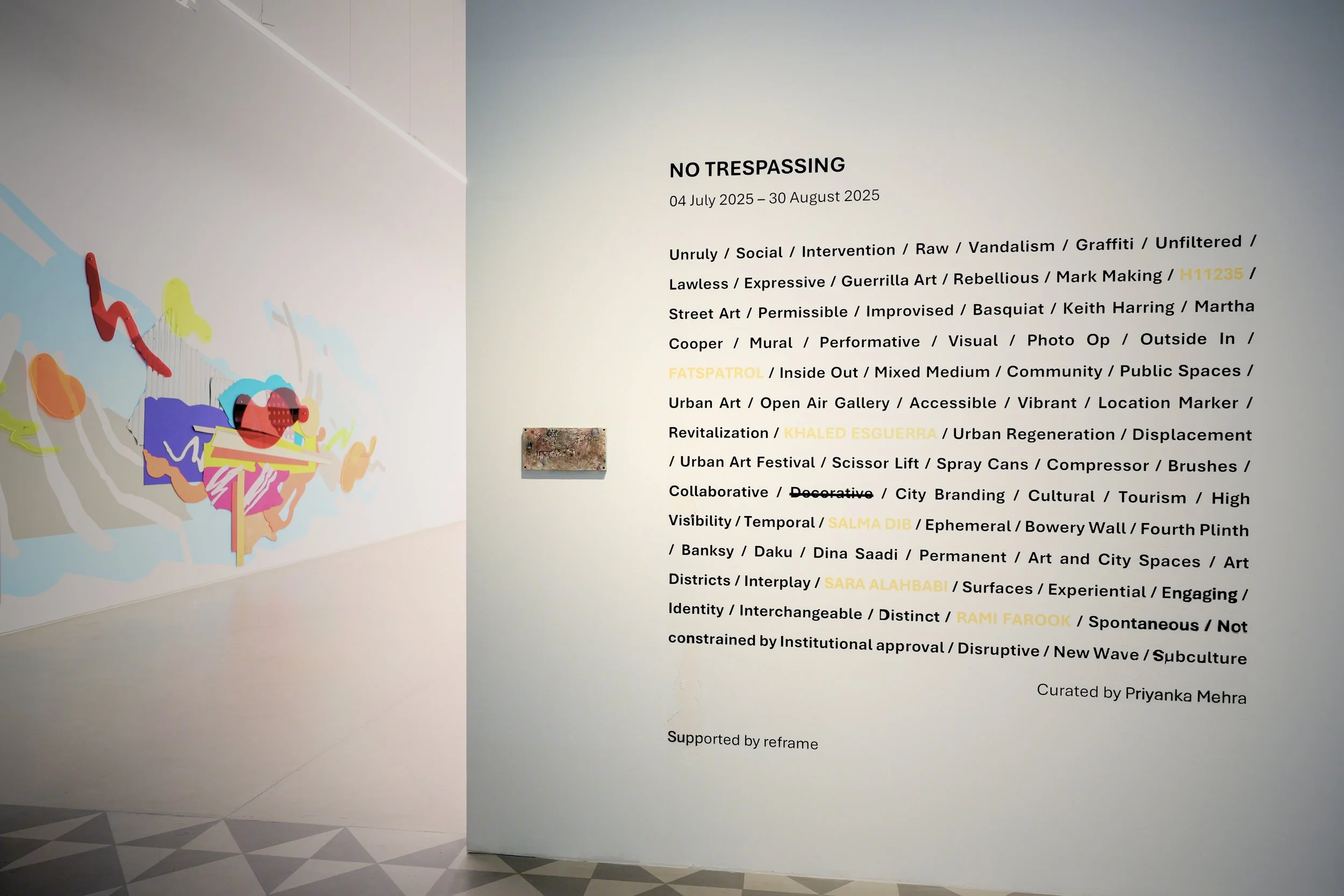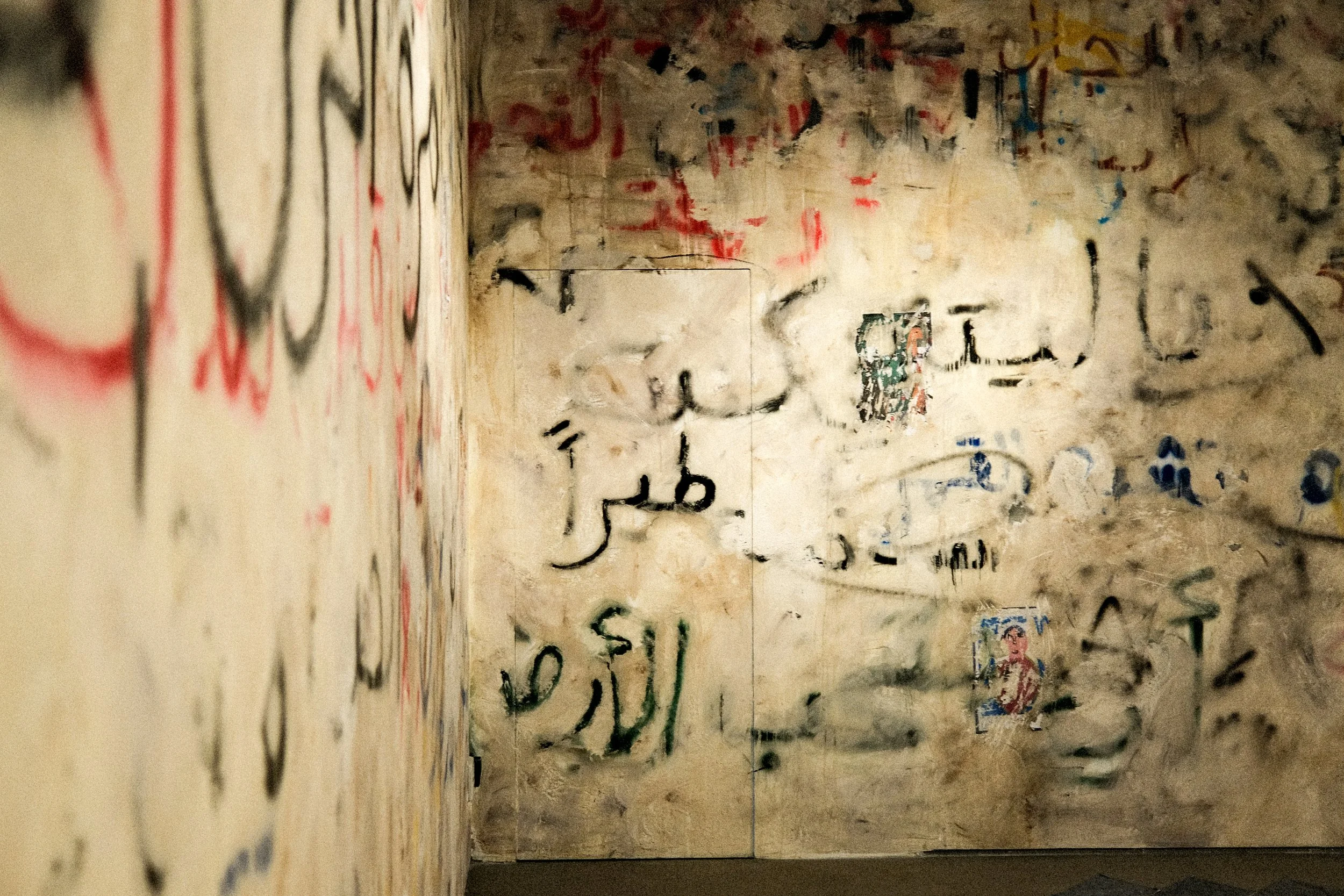
Generational Wall: Orders and Echoes was presented as part of No Trespassing, a group exhibition curated by Priyanka Mehra at the Ishara Art Foundation. The exhibition considered the street as a site where the public leaves marks, alters surfaces, and produces unofficial forms of expression.
Dib’s work began from the idea that public walls operate outside systems of permission and authorship. Writing on a public wall is often anonymous. It can be removed, covered, or replaced by another hand. What remains is not a single voice but a surface shaped by many people over time. The wall becomes a place where individuals assert presence without being fully visible.
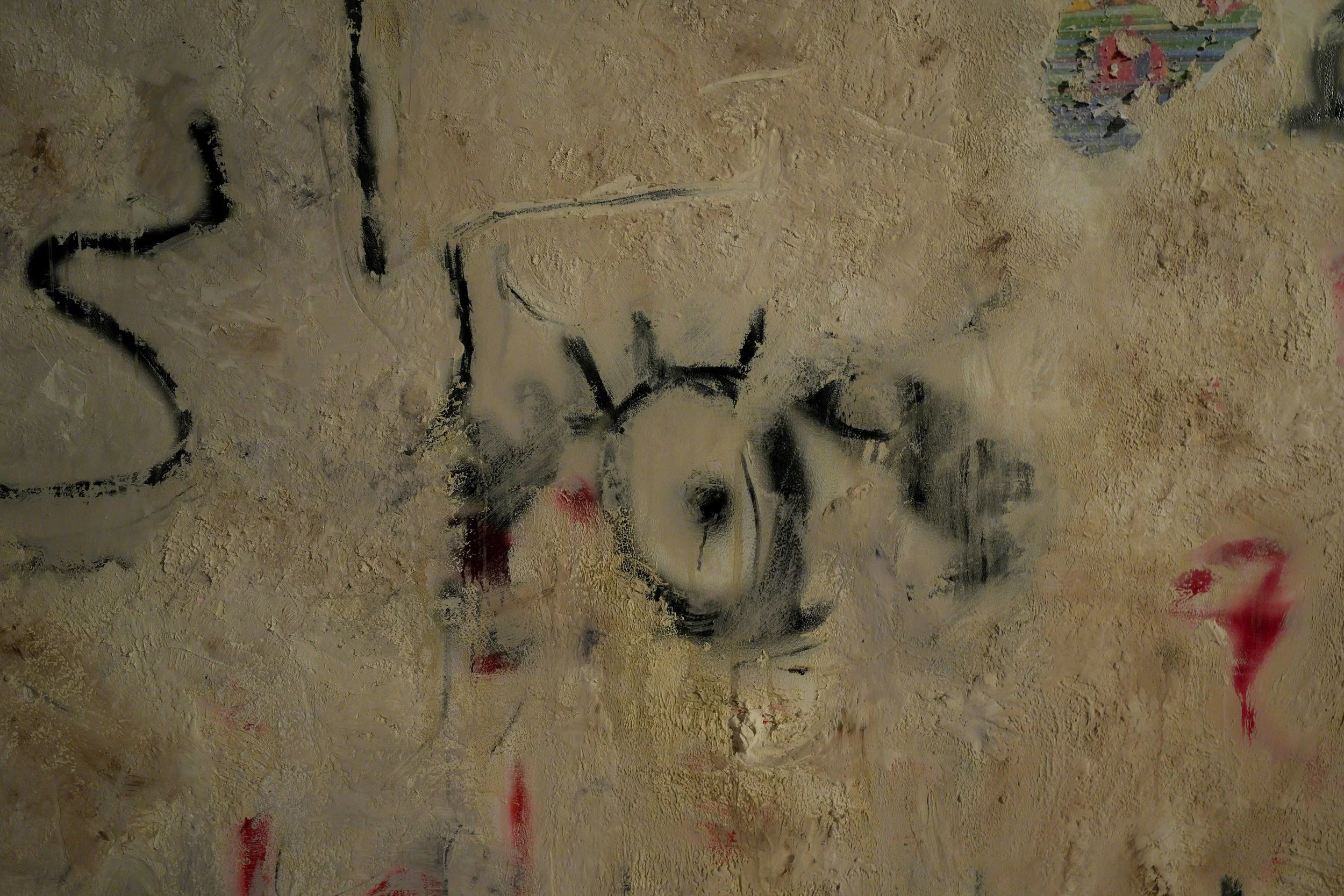
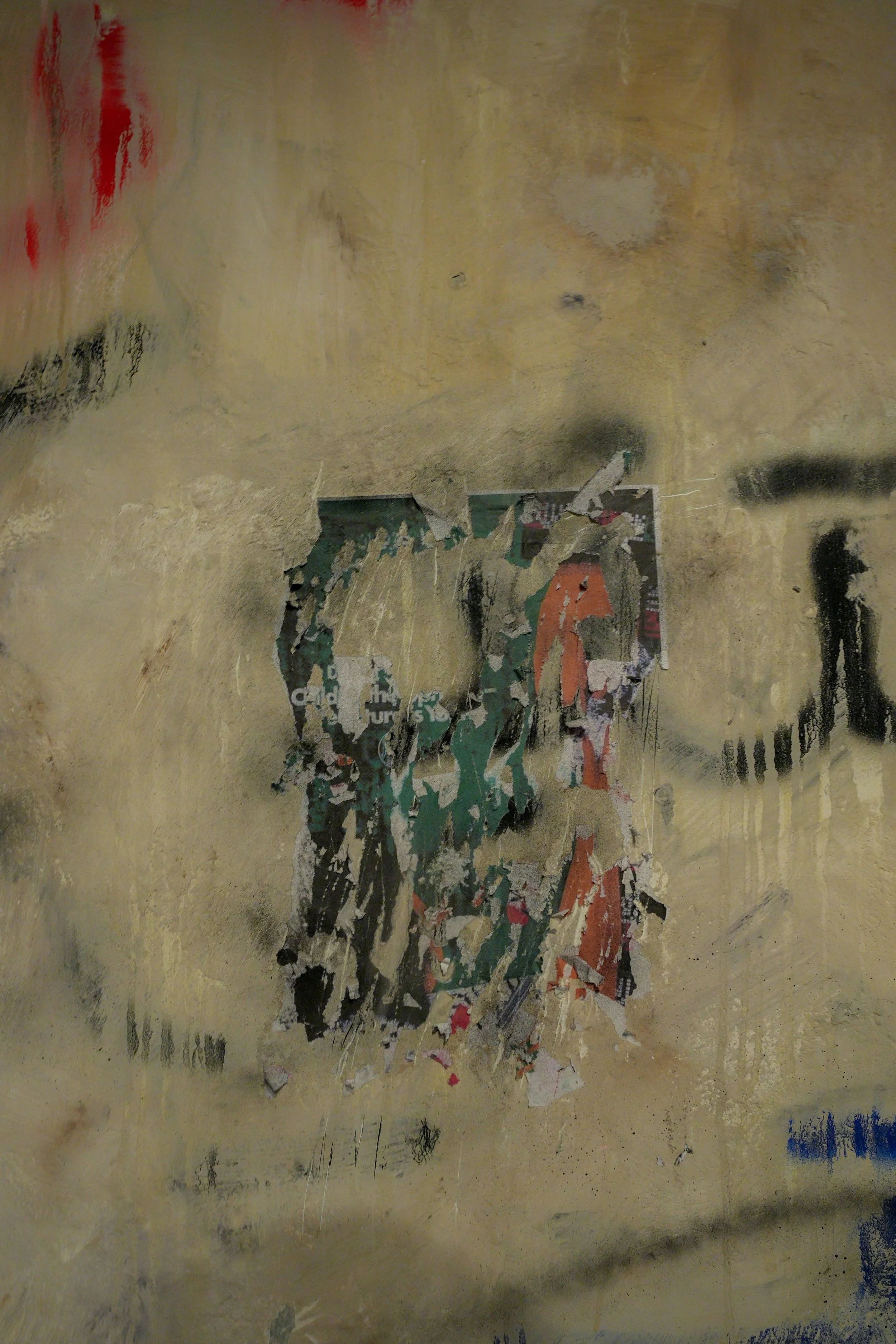
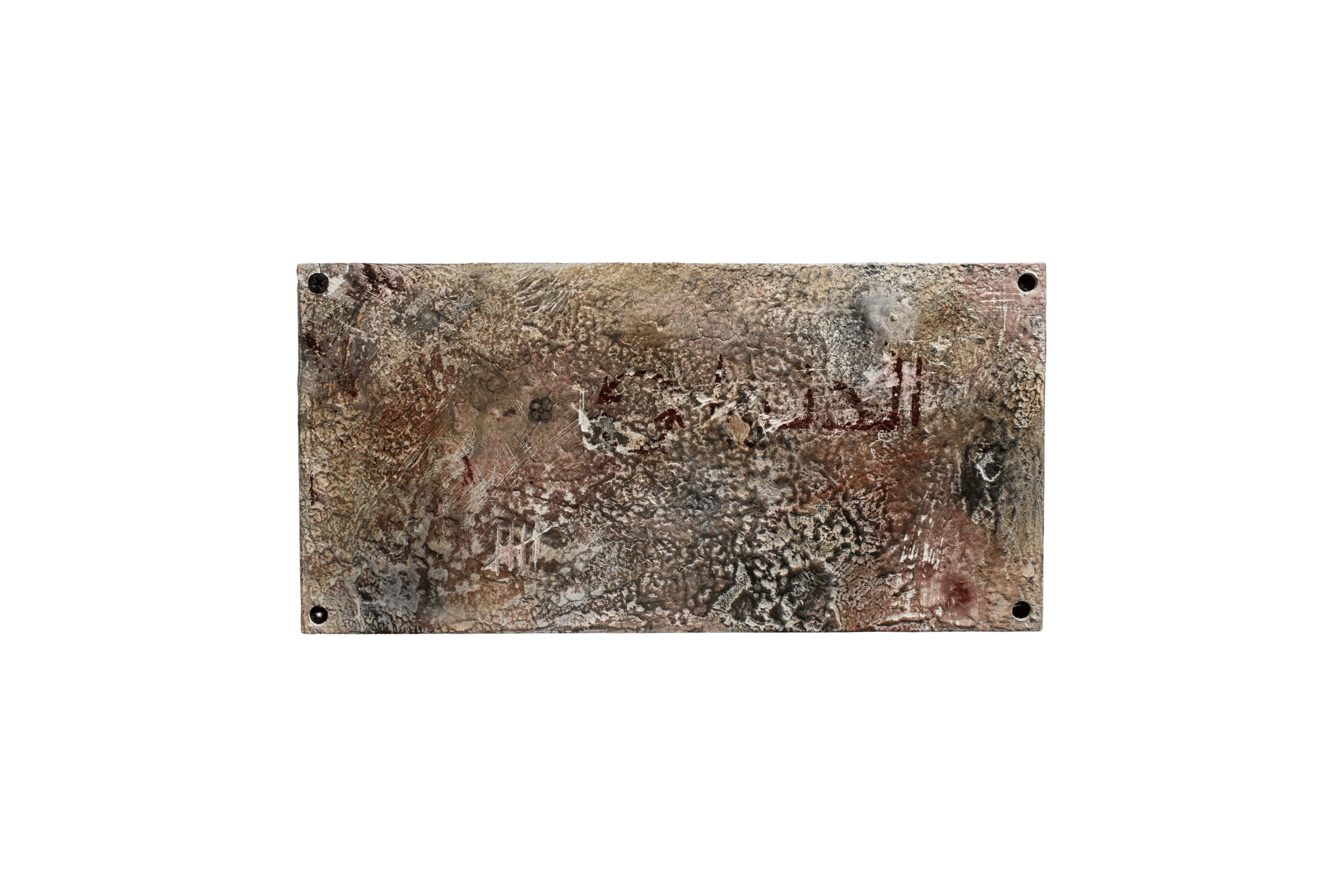
In the installation, the gallery wall was treated as a surface that could receive marks, carry traces, and hold layers of writing and material. Drawing from the visual language of walls in Palestine, Jordan, and Syria, the work considered writing as an act that resists disappearance. Even when marks are erased, their fragments remain and new marks appear in their place.
The work did not present the wall as an image but as a surface that is continually changed by those who use it. In this way, the wall becomes a record of repeated acts of presence. Anonymity, erasure, and rewriting are not secondary conditions but central to how the work understands resistance and memory.